
The Short Answer
Getting your garage door ready for winter means doing four things before the first hard freeze: replace worn weatherstripping, lubricate the moving hardware, test the door's balance, and check that the opener's safety sensors and battery backup are working. Do these now, in October, while temperatures are still mild enough to work outside comfortably and before salt, slush, and freeze-thaw cycles start stressing every part of the system.
Why This Matters More Here Than in Other Climates
Plainview and the surrounding parts of Long Island get a real mix of winter weather: nor'easters, repeated freeze-thaw swings, and road salt that gets tracked into garages on tires and boots. That salt-laden moisture is harsh on metal tracks, hinges, and springs, and the constant temperature swings make lubricants gum up or thin out at the wrong times. A lot of the housing stock in this area is older, too, which often means original doors and hardware that were never built with today's insulation standards or opener technology in mind. None of that is a reason to panic, but it is a reason to do a real inspection every fall instead of just hoping the door makes it through another winter.
Step 1: Replace or Reinforce Weatherstripping
The rubber seal along the bottom of the door and the strips along the sides and top are your first line of defense against cold air, wind-driven snow, and moisture. Over a summer of UV exposure and humidity, this rubber dries out, cracks, or pulls away from its track. Walk around the closed door with a flashlight at night, inside the garage, and see where daylight leaks in. Any gap you can see light through is a gap cold air and moisture will use all winter. Bottom seals are inexpensive to replace and make a noticeable difference in how much cold air reaches whatever you're storing or parking in there.
Step 2: Lubricate the Moving Parts
Hinges, rollers, and the springs themselves need a fresh coat of a garage-door-specific lithium or silicone-based lubricant before winter sets in. Skip anything petroleum-based like WD-40 for this job; it's a solvent that can actually strip away grease rather than add it, and it doesn't hold up well in cold temperatures. A light, even coat on hinges and rollers (not the track itself) keeps things moving smoothly even when metal contracts in the cold. This is also a good moment to listen for grinding or squeaking you might have been ignoring all summer.
Step 3: Test the Door's Balance
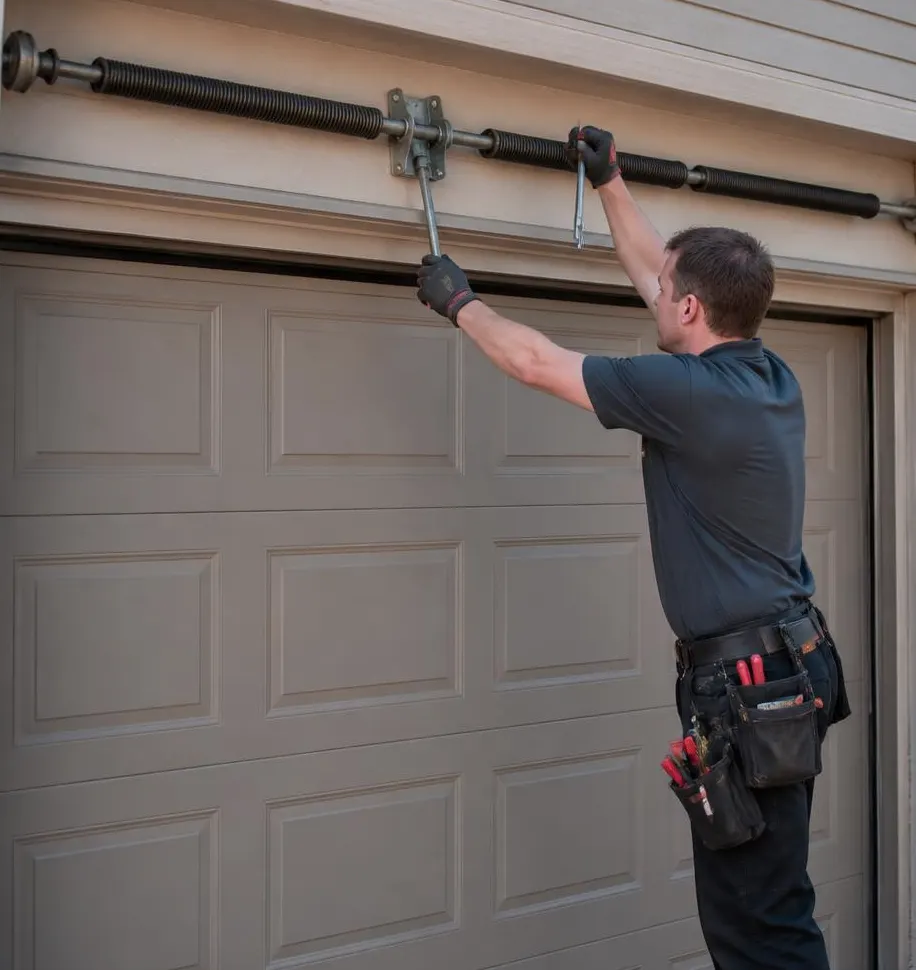
Disconnect the opener (pull the manual release cord) and lift the door halfway by hand. A properly balanced door will stay put on its own. If it falls, slams down, or shoots upward, the springs are compensating poorly for the door's weight, and that imbalance only gets worse as cold weather adds strain to the system. This isn't a DIY fix if it fails the test; a door under the wrong spring tension is dangerous to work on and should be handled by someone trained to do it safely.
Step 4: Check the Opener, Sensors, and Backup Power
Winter storms mean power outages, and a garage door opener with a battery backup is the difference between being able to get your car out and being stuck. Test the backup now, not during the first nor'easter of the season. While you're at it, wipe down the photo-eye sensors near the bottom of the track; dust, cobwebs, and condensation can cause the door to reverse unexpectedly or refuse to close, and that's a much more frustrating problem to chase down on a freezing night than on a mild October afternoon.
A Few Extra Things Worth Checking
- Tighten any loose bolts on the track brackets; vibration loosens hardware over time, and cold metal makes loose connections worse.
- Clear leaves and debris from the track and surrounding area so moisture doesn't pool and freeze there.
- If your garage isn't insulated and you use it as a workspace or for anything temperature-sensitive, this is the season to ask about insulated door options or retrofitting weatherstripping more thoroughly.
When to Call Plainview Garage Door Solutions
If the balance test fails, if you're hearing new noises during lubrication, or if the opener's sensors or backup battery aren't cooperating, it's time to bring in a technician rather than keep tinkering. We handle garage door maintenance visits that cover exactly this kind of pre-winter inspection, and if your door turns up a worn spring or a failing opener, we also do spring replacement and opener repair and replacement so the fix happens before you're dealing with a dead door in freezing temperatures.
If you're in Plainview, Old Bethpage, Bethpage, Hicksville, Syosset, Woodbury, Farmingdale, or Melville and want your garage door checked out before winter hits, give Plainview Garage Door Solutions a call. We'll get it sorted before the first freeze makes it worse.