
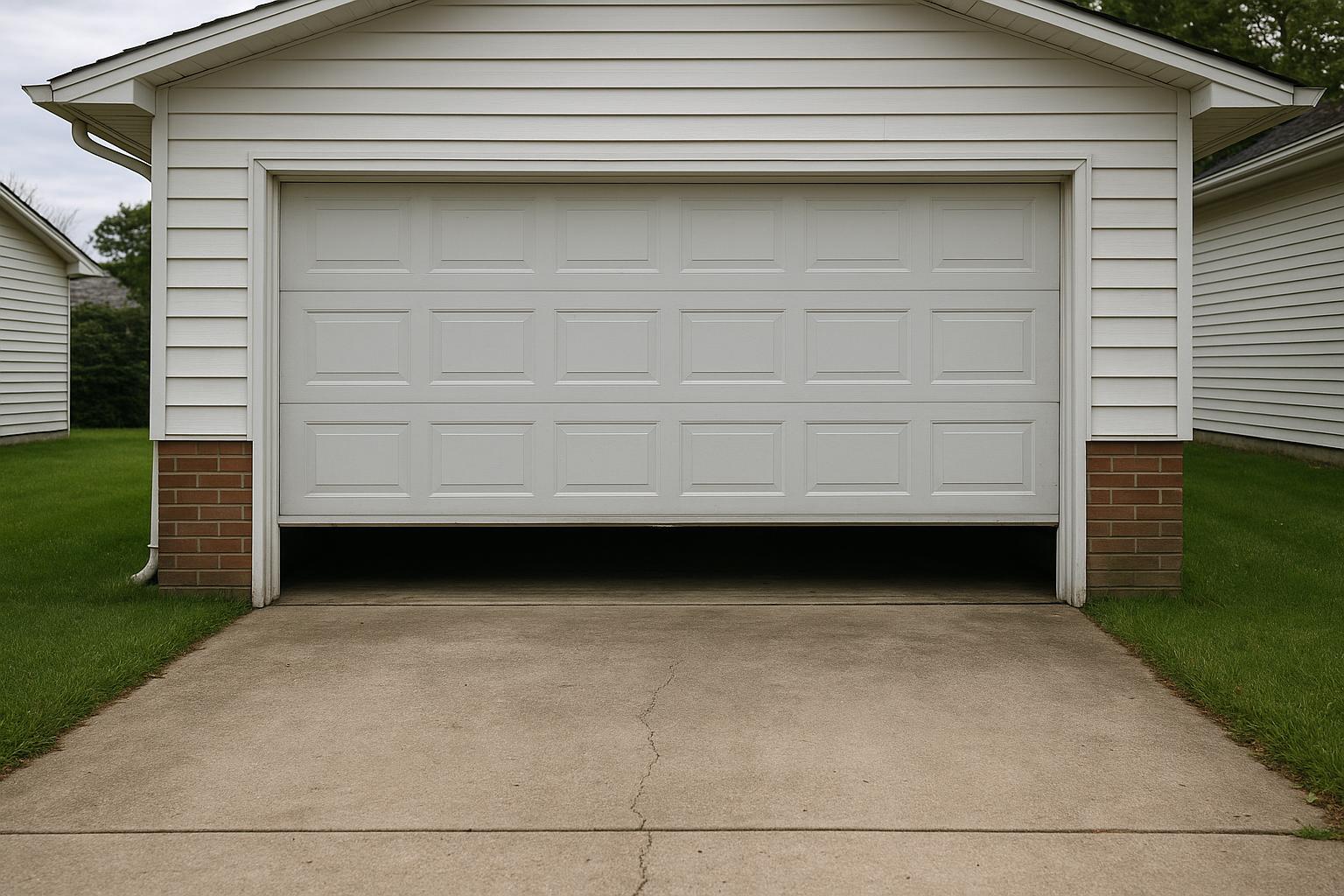
That Frustrating Moment When Your Garage Door Won't Stay Closed
You press the button on your remote, watch your garage door glide downward, and then — just inches from the floor — it stops and reverses right back up. You try again. Same result. Maybe it works on the third attempt, maybe it doesn't. Either way, you're standing in your driveway in Plainview wondering what just happened.
This is one of the most common garage door complaints we hear at Plainview Garage Door Solutions, and the good news is that it's usually fixable. The bad news? Ignoring it can lead to bigger problems, security risks, and wasted energy — especially during our Long Island winters when a garage that won't fully close lets in freezing air.
Let's walk through the most likely reasons your garage door reverses before reaching the floor and what you can do about each one.
1. Misaligned or Dirty Safety Sensors
This is the number one cause of a garage door that reverses before closing completely. Every garage door opener manufactured after 1993 is required to have photo-eye safety sensors mounted near the bottom of the door tracks, about six inches off the ground. These sensors send an invisible beam across the opening. If something breaks that beam — a bike, a trash can, a child, or even a cobweb — the door automatically reverses to prevent injury or damage.
Here's what to check:
- Obstruction in the path: Look for anything between the two sensors. Even a small leaf or piece of debris can trigger a reversal.
- Dirty lenses: The sensor lenses collect dust, dirt, and spider webs over time. Wipe them gently with a soft cloth.
- Misalignment: If one sensor gets bumped, the beam won't connect. Most sensors have a small LED light — if it's blinking instead of solid, the alignment is off. Carefully adjust the sensor bracket until the light holds steady.
If you've cleaned and realigned the sensors and the problem persists, the wiring between the sensors and the opener may be damaged and should be inspected by a professional.
2. Incorrect Close-Limit Settings
Your garage door opener has close-limit settings that tell the motor exactly how far the door should travel before it's considered fully closed. If these settings are off — even slightly — the opener may interpret the door hitting the ground as an obstruction and reverse it.
This commonly happens after a new opener installation, a spring replacement, or even seasonal temperature changes that cause metal tracks and components to expand or contract. Homeowners in Plainview and surrounding areas like Old Bethpage and Hicksville often notice this issue as seasons shift.
Adjusting the close-limit switch typically involves turning a small screw on the back or side of the opener unit. Your owner's manual will have specific instructions for your model. However, if you're unsure, it's best to have a technician handle this adjustment to avoid creating new problems.
3. Worn or Broken Springs
Garage door springs counterbalance the weight of the door, making it possible for the opener to lift and lower it smoothly. When a spring is worn, weakened, or broken, the door becomes significantly heavier for the opener to manage. The opener's safety mechanism may detect this extra resistance during closing and interpret it as an obstruction, triggering a reversal.
Signs that your springs may be the issue include:
- The door feels unusually heavy when you try to lift it manually
- You hear loud creaking or grinding sounds during operation
- The door closes unevenly or appears crooked
- You notice a visible gap in one of the torsion springs above the door
Important safety warning: Garage door springs are under extreme tension and can cause serious injury if handled improperly. Spring replacement should always be performed by a trained technician. This is not a DIY project.
4. Problems with the Tracks or Rollers
If your garage door tracks are bent, dented, or misaligned, the door can bind or stick as it moves downward. When the opener encounters this resistance, it may reverse the door as a safety precaution. Similarly, worn or damaged rollers can create friction that the opener interprets as an obstruction.
Take a close look at your tracks on both sides of the door. They should be straight, parallel, and free of debris. The rollers should spin freely without wobbling or grinding. If you notice any damage to the tracks or if the rollers look cracked or worn, it's time for a professional inspection.
5. Opener Force Settings Need Adjustment
In addition to limit settings, most garage door openers have force settings that control how much power the motor uses to open and close the door. If the closing force is set too low, the opener may not have enough power to push the door all the way down, especially if there's even minor friction in the system.
Like limit settings, force adjustments are usually made with small screws or dials on the opener unit. But be cautious — setting the force too high can override the safety reversal feature, which exists to protect people and property. A qualified technician can find the right balance.
6. Damaged or Malfunctioning Opener
If you've checked everything above and the door still reverses, the problem may be with the opener itself. Circuit boards can fail, gears can strip, and internal components wear out over time. Most garage door openers last 10 to 15 years with proper maintenance. If yours is approaching that age and experiencing multiple issues, replacement may be more cost-effective than repeated repairs.
We work with homeowners throughout Plainview, Syosset, Woodbury, and Bethpage who are often surprised at how much quieter and more reliable modern openers are compared to models from even a decade ago. Today's belt-drive and direct-drive openers offer smartphone connectivity, battery backup, and significantly smoother operation.
When to Call a Professional
Some of these fixes — cleaning sensors, removing obstructions — are simple enough for any homeowner to handle. But when the issue involves springs, track alignment, opener internals, or wiring, professional service is the safer and smarter choice.
At Plainview Garage Door Solutions, we diagnose reversing issues quickly and explain exactly what's going on before we do any work. There's no guesswork, no unnecessary upselling — just honest answers and reliable repairs.
If your garage door has been reversing and you can't pinpoint the cause, give us a call. We serve Plainview and the surrounding communities with prompt, professional garage door service, including emergency repairs when you need help fast.
Don't Let a Reversing Door Become a Bigger Problem
A garage door that won't close all the way isn't just annoying — it's a security vulnerability and an energy drain. The longer you wait, the more likely a minor issue becomes a major repair. Whether it's a simple sensor cleaning or a full spring replacement, addressing the problem early saves you time, money, and stress down the road.