
Stuck Inside (or Outside) With a Garage Door That Won't Budge?
It's a scenario most homeowners dread: the power goes out during a storm, your garage door opener stops responding, or you simply need to disconnect the door from the automatic system — and suddenly you realize you have no idea how to open your garage door manually. For many families in Plainview and surrounding communities, the garage door is the primary entry point to the home. When it won't open, your entire routine grinds to a halt.
The good news is that nearly every modern garage door is designed with a manual release mechanism. The not-so-good news is that several underlying problems can make manual operation difficult or even dangerous. In this guide, we'll walk you through how to safely open your garage door by hand, explain why it might be stuck, and help you know when it's time to call a professional.
How the Manual Release Works
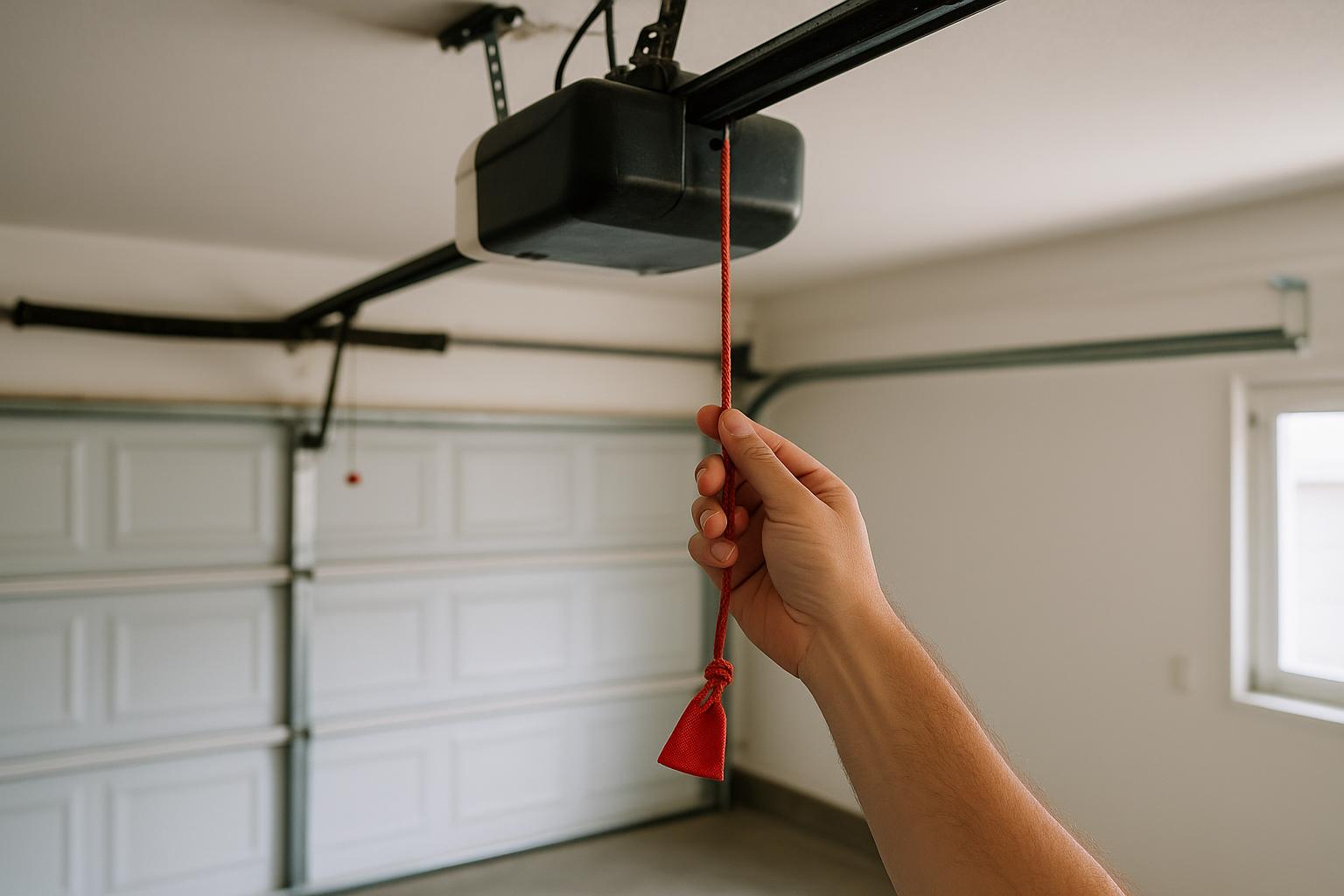
If you look up at the rail that connects your garage door opener to the door itself, you'll notice a short rope or cord — usually red — hanging down. This is the emergency release handle. Pulling this cord disengages the door from the opener's drive mechanism, allowing you to lift and lower the door manually.
Here's the basic process:
- Make sure the door is fully closed. Never pull the emergency release when the door is partially open, especially if you suspect a broken spring. The door could come crashing down under its own weight.
- Pull the red emergency release cord straight down and slightly toward the opener motor. You should hear or feel a click as the trolley disconnects from the rail carriage.
- Lift the door from the bottom. Grip the door at the lowest horizontal panel and lift it straight up. A properly balanced door should feel relatively light — around 10 to 15 pounds of effort.
- Secure the door in the open position. If you need to leave it open, make sure it stays up on its own. If it slides back down, that's a sign of a spring or balance issue.
To reconnect the door to the opener later, simply pull the release cord again (toward the door this time) or press your opener button — the trolley will re-engage automatically on most models.
Why Your Garage Door Might Be Hard to Open by Hand
If you've pulled the emergency release and the door still won't move — or it feels incredibly heavy — something else is going on. Here are the most common reasons a garage door resists manual operation:
1. Broken or Worn-Out Springs
Your garage door springs do the heavy lifting — literally. They counterbalance the weight of the door, which can be anywhere from 130 to over 400 pounds depending on the material and size. If a spring has snapped or lost tension, the door will feel impossibly heavy when you try to lift it by hand. Do not attempt to force it open. A door without functioning springs is a serious safety hazard.
2. The Door Is Off Its Tracks
If the door has shifted or a roller has popped out of the vertical or horizontal track, the panels can bind and refuse to move. You might notice the door sitting unevenly or see a gap between the track and a roller. Forcing a door that's off-track can cause further damage to the panels, tracks, and hardware.
3. Obstructed or Damaged Tracks
Dents, debris, or rust buildup inside the tracks can create enough friction to prevent smooth movement. Even small obstructions — a pebble, a piece of weatherstripping that came loose, or a bent section of track — can lock things up.
4. The Lock Is Engaged
This one sounds obvious, but it's more common than you'd think. Many garage doors have a manual lock bar — a horizontal bar that slides into a slot on the track. If someone engaged the lock (or if it slipped into the locked position on its own), the door won't move regardless of whether the opener is connected. Check both sides of the door for a lock mechanism before assuming something is broken.
5. Rust and Lack of Lubrication
Garage doors that haven't been maintained in a while can develop rust on the springs, hinges, and rollers. Over time, this corrosion creates resistance that makes manual operation difficult. Regular lubrication with a silicone-based spray is one of the simplest things Plainview homeowners can do to keep their doors operating smoothly.
Safety First: When Not to Force It
We understand the frustration of being stuck, especially when you're trying to get to work or your car is trapped inside the garage. But forcing a garage door open when something is mechanically wrong can lead to:
- Serious personal injury from a door that suddenly drops
- Bent or broken panels that turn a simple repair into a full replacement
- Damaged tracks and hardware that increase your repair bill
- Voided warranties on your opener or door system
If the door feels excessively heavy, makes grinding or popping sounds, or visibly looks misaligned, stop what you're doing and call a garage door technician. It's not worth the risk.
Tips to Prevent Getting Stuck
A little preventive care goes a long way toward making sure your garage door works when you need it most — including during manual operation. Here are a few things you can do:
- Test the manual release every few months. Pull the cord, lift the door, and make sure everything moves freely. This way you won't be figuring it out for the first time during an emergency.
- Schedule annual maintenance. A professional tune-up includes spring inspection, track alignment, lubrication, and balance testing — all of which directly affect how easily your door operates by hand.
- Keep the tracks clean. Wipe down the inside of your tracks periodically and remove any debris.
- Listen for warning signs. Changes in how your door sounds or moves are often early indicators that something is wearing out.
- Know where your manual lock is. Familiarize yourself with your door's lock bar so you can quickly check it if the door won't move.
When to Call a Professional in Plainview
If you've tried the manual release and your garage door still won't open — or if it opens but won't stay up — it's time to bring in a professional. Spring failures, track misalignment, and structural damage all require the right tools, replacement parts, and expertise to fix safely.
At Plainview Garage Door Solutions, we help homeowners across Plainview, Old Bethpage, Hicksville, Syosset, and surrounding areas get their garage doors back on track — often the same day. Whether you need an emergency repair, a spring replacement, or a full maintenance checkup, our team shows up on time and gets the job done right.
Don't wait until you're stuck in your driveway on a Monday morning. If your garage door has been giving you trouble, contact us today to schedule an inspection and make sure your door is ready to work — automatically or manually — whenever you need it.