
Your Garage Door Shouldn't Sound Like That
You press the button on your garage door opener, and instead of a smooth, quiet operation, you're greeted with grinding, squealing, popping, or rattling. If your garage door has started making noises that concern you — or annoy your neighbors — it's not something to ignore. Those sounds are almost always a sign that something in your garage door system needs attention.
For homeowners in Plainview and the surrounding Long Island communities, a noisy garage door is one of the most common complaints we hear. The good news is that most causes are identifiable and fixable. Let's walk through the most common garage door noises, what they typically mean, and what you should do about them.
Squealing or Screeching Sounds
A high-pitched squeal or screech when your garage door opens or closes is one of the most common — and most irritating — noises homeowners deal with. This sound usually points to one of two things:
- Lack of lubrication. Metal rollers, hinges, and tracks need periodic lubrication to operate smoothly. Over time, the factory lubricant dries out, and metal-on-metal contact creates that unmistakable squeal. A proper garage door lubricant (not WD-40, which is a degreaser) applied to the rollers, hinges, springs, and bearing plates can often solve this immediately.
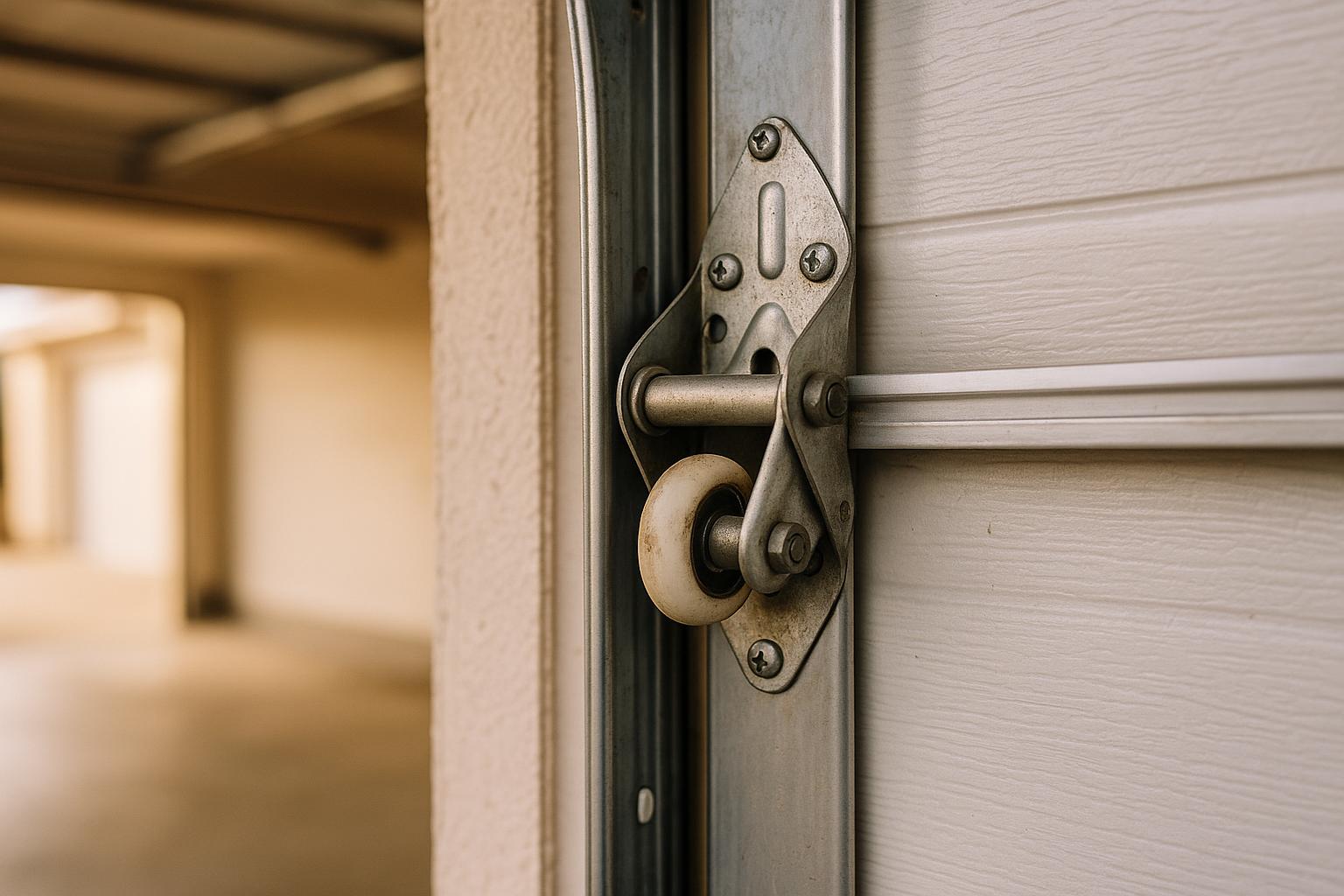
- Worn-out rollers. If your garage door uses steel rollers, they tend to get noisier as they age. Upgrading to nylon rollers is one of the best investments you can make for a quieter garage door. They don't require lubrication and operate significantly more quietly than their metal counterparts.
If lubricating the moving parts doesn't resolve the squealing, it's a good idea to have a technician inspect the system. There could be a roller that's seized up or a hinge that's beginning to bind.
Grinding or Scraping Noises
A grinding or scraping sound is more concerning than a squeal. This noise typically indicates that something is rubbing or dragging where it shouldn't be. Common causes include:
- Misaligned tracks. Your garage door travels along a pair of metal tracks on either side. If one or both tracks shift out of alignment — which can happen from an impact, loose mounting brackets, or normal wear — the door can scrape against the track as it moves. You might also notice the door hesitating or jerking during operation.
- Damaged rollers. Rollers that are cracked, chipped, or have lost their shape can grind against the track instead of rolling smoothly through it.
- A bent track section. Even a small dent or bend in the track can cause significant noise and resistance. This is especially common near the bottom of the track where objects or vehicles can accidentally make contact.
Grinding noises should be addressed promptly. Continuing to operate a garage door with misaligned tracks or damaged rollers can cause further damage to the door panels themselves, turning a minor repair into a much more expensive one.
Rattling and Vibrating
If your garage door sounds like it's shaking apart every time it moves, the culprit is usually loose hardware. Your garage door opens and closes roughly 1,500 times per year, and all that movement causes nuts, bolts, and screws to gradually loosen over time.
Here's what to check:
- Hinge bolts. The hinges connecting your door panels are held in place by bolts that can work themselves loose. A socket wrench can tighten these in minutes.
- Track mounting brackets. The brackets that secure the tracks to your garage wall and ceiling can loosen, causing the entire track to vibrate during operation.
- Opener mounting hardware. If your garage door opener is mounted to the ceiling with a bracket and the bolts have loosened, the entire unit can vibrate and amplify noise throughout the garage.
- Chain drive tension. If you have a chain-drive opener, a loose chain will slap and rattle during operation. The chain tension may need adjustment.
A basic tightening of all visible hardware is part of routine garage door maintenance, and it's something every Plainview homeowner should do — or have done professionally — at least once a year.
Popping or Snapping Sounds
A sharp pop or snap during garage door operation can be startling. This sound is often related to your garage door's torsion springs. As the springs wind and unwind to lift and lower the heavy door, they can make popping noises if they're dry, corroded, or under uneven tension.
Lubricating the springs with a garage door-specific spray can sometimes reduce this noise. However, if the popping is loud, sudden, or getting worse, it could indicate that a spring is nearing the end of its lifespan. Torsion springs are under extreme tension and should only be inspected or adjusted by a trained professional. A spring failure isn't just noisy — it can be dangerous.
Banging When the Door Closes
If your garage door slams shut with a loud bang instead of settling gently onto the floor, the problem is usually with your opener's closing speed or the door's balance. Possible causes include:
- Broken or weak springs. When springs lose tension, they can no longer control the door's descent properly, causing it to drop the last few inches instead of lowering smoothly.
- Opener force settings. Most modern openers have adjustable force settings that control how much power is used to open and close the door. If the close force is set too high, the door may slam down aggressively.
- Disconnected or damaged lift cables. The cables that connect to the bottom brackets of your door work in tandem with the springs. If a cable is frayed or has slipped off its drum, the door may not lower evenly.
A banging garage door puts unnecessary stress on the entire system — the panels, tracks, opener, and hardware — so it's worth getting this resolved quickly.
When to Call a Professional
Some garage door noises have simple DIY solutions, like applying lubricant or tightening a few bolts. But many of the underlying causes — misaligned tracks, worn springs, damaged cables, or opener malfunctions — require professional tools and expertise to fix safely.
Here's a good rule of thumb: if lubricating and tightening doesn't solve the noise, or if the sound is accompanied by visible damage, uneven movement, or difficulty opening and closing, it's time to call in a technician.
At Plainview Garage Door Solutions, we see noisy garage doors every week across Plainview, Hicksville, Syosset, Old Bethpage, and the surrounding communities. In most cases, we can diagnose the issue and resolve it in a single visit. Many noise problems are caught and prevented entirely through our routine maintenance service, which includes lubrication, hardware inspection, balance testing, and safety checks.
Don't Wait Until a Noise Becomes a Breakdown
A noisy garage door is more than an annoyance — it's an early warning system. The sounds your door makes can tell you exactly what's wearing out, what's loose, and what's about to fail. Paying attention to those signals and acting on them early can save you from unexpected breakdowns, costly emergency repairs, and safety hazards.
If your garage door has started making sounds that don't seem right, give us a call. We'll figure out what's going on and get your door running quietly and reliably again.