
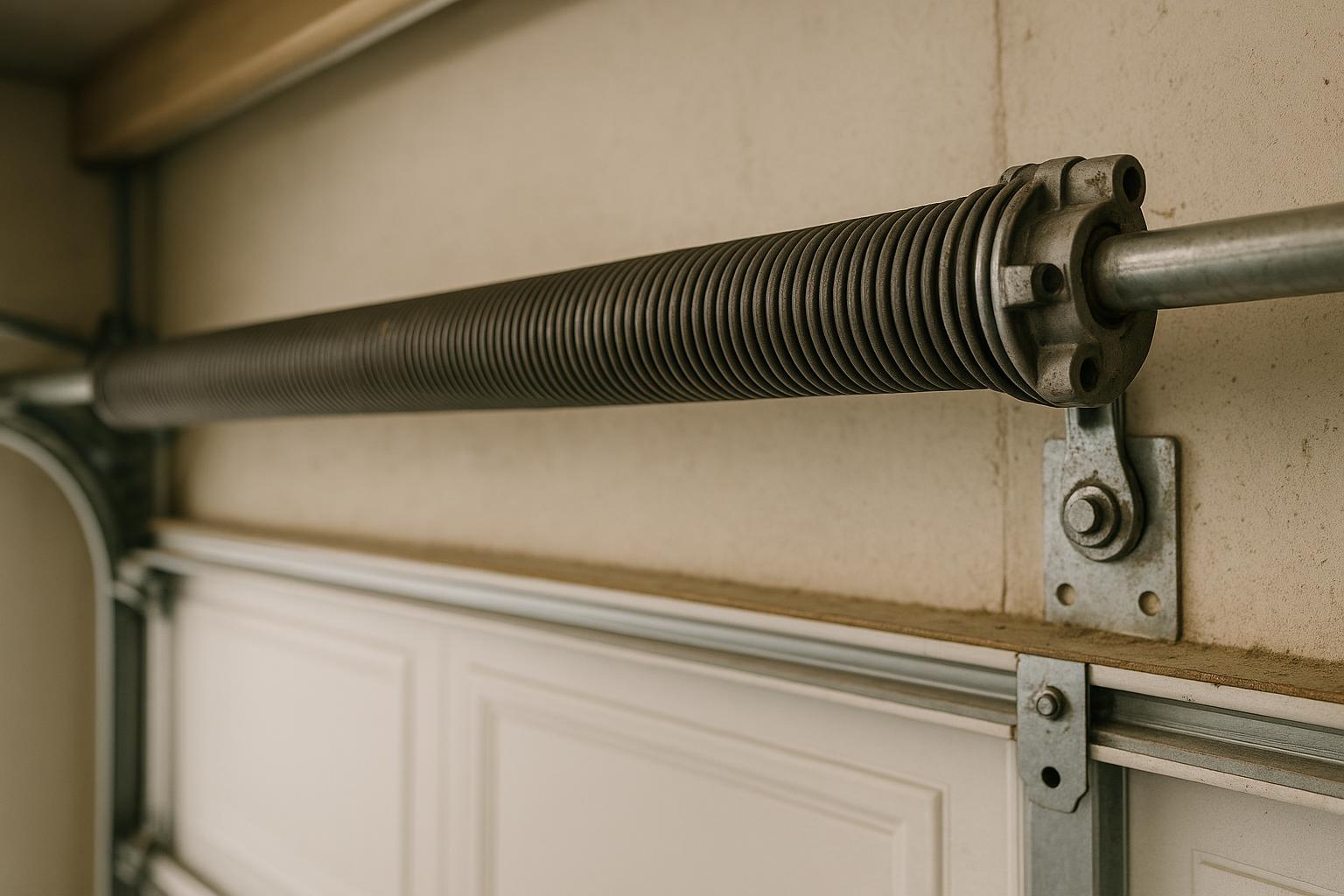
Your Garage Door Springs Are Doing More Work Than You Think
Most homeowners in Plainview don't think about their garage door springs — until something goes wrong. But those tightly wound coils above your door are arguably the hardest-working component of your entire garage door system. They bear the full weight of the door every time it opens and closes, and over time, they wear out.
A broken garage door spring isn't just an inconvenience. It can leave your car trapped inside, create a serious safety hazard, and lead to damage to your opener or the door itself. The good news is that springs rarely fail without warning. If you know what to look for, you can catch the problem early and schedule a replacement before you're stuck with an emergency on your hands.
What Do Garage Door Springs Actually Do?
Your garage door likely weighs between 130 and 350 pounds, depending on its size and material. Without springs, your opener motor would have to lift that entire weight on its own — which it simply isn't designed to do. The springs act as a counterbalance system, storing mechanical energy and releasing it to assist in lifting and lowering the door smoothly.
There are two main types of garage door springs:
- Torsion springs — mounted on a metal shaft above the door opening. These twist and unwind to raise and lower the door. Most modern homes in Plainview and surrounding areas use torsion springs.
- Extension springs — mounted along the horizontal tracks on either side of the door. These stretch and contract to provide lifting force. They're more common in older installations.
Both types have a limited lifespan, typically rated for around 10,000 cycles (one cycle equals one full open and close). For a household that uses the garage door four times a day, that works out to roughly seven to ten years of service.
7 Warning Signs Your Garage Door Springs Are Failing
1. The Door Feels Heavier Than Usual
Try disconnecting your opener by pulling the emergency release cord, then manually lift the door. A properly balanced door with healthy springs should lift relatively easily and stay open about three to four feet off the ground. If the door feels extremely heavy or slams shut the moment you let go, your springs are losing tension.
2. The Door Opens Unevenly or Crooked
If one side of your garage door rises faster than the other, it could mean one of your springs has weakened or broken while the other is still functional. This uneven movement puts stress on the tracks, rollers, and opener, potentially causing additional damage.
3. You Hear a Loud Bang From the Garage
A snapping garage door spring releases a tremendous amount of stored energy and produces a sound that many homeowners describe as a gunshot or a car backfiring. If you hear a sudden, loud bang from your garage and find that the door won't open, a broken spring is almost certainly the cause.
4. There's a Visible Gap in the Spring
Take a look at the torsion spring above your garage door. An intact spring is a tightly wound, continuous coil. If you see a visible gap — a separation of an inch or two in the coil — the spring has snapped and needs immediate replacement.
5. The Opener Struggles or Stops Mid-Cycle
When springs lose their counterbalancing ability, your garage door opener has to work much harder. You might notice the motor straining, the door moving more slowly than normal, or the opener stopping partway through the cycle. Running your opener under this kind of stress can burn out the motor prematurely.
6. The Door Closes Too Fast
Springs control the speed at which your door descends. If your garage door drops quickly when closing instead of lowering at a steady, controlled pace, the springs may no longer be providing adequate resistance. This is a genuine safety concern, especially for families with children or pets.
7. The Springs Look Rusty or Stretched
Visible rust on your springs accelerates wear by increasing friction between the coils. Stretched-out or deformed coils are another sign that the springs are nearing the end of their useful life. If your springs look worn, it's worth having them inspected by a professional.
Can You Replace Garage Door Springs Yourself?
We understand the DIY spirit — many homeowners in Plainview and Old Bethpage are handy and prefer to tackle home repairs on their own. However, garage door spring replacement is one job we strongly recommend leaving to trained professionals.
Here's why:
- Extreme tension. Torsion springs are wound under enormous pressure. A spring that slips or releases unexpectedly during installation can cause severe injuries.
- Specialized tools required. Proper replacement requires winding bars, clamps, and other tools that most homeowners don't have on hand.
- Precise calibration. Springs must be wound to the correct tension for your specific door weight and size. Incorrect calibration leads to poor performance, premature wear, and potential safety issues.
Professional spring replacement typically takes less than an hour and ensures the job is done safely and correctly the first time.
How to Extend the Life of Your Garage Door Springs
While springs won't last forever, there are steps you can take to maximize their lifespan:
- Lubricate your springs regularly. Apply a silicone-based or white lithium garage door lubricant to the springs two to three times per year. This reduces friction, prevents rust, and helps the coils move smoothly.
- Schedule annual maintenance. A professional tune-up includes inspecting springs for wear, checking balance, tightening hardware, and lubricating all moving parts. It's one of the best investments you can make in the longevity of your garage door system.
- Consider high-cycle springs. If you're replacing springs, ask about high-cycle options rated for 25,000 or even 50,000 cycles. They cost more upfront but can last two to five times longer than standard springs.
- Don't ignore small problems. Strange noises, slow operation, or minor imbalances are your garage door telling you something needs attention. Addressing issues early prevents them from escalating.
When to Call a Professional in Plainview
If you've noticed any of the warning signs listed above, don't wait for a complete failure. A broken spring at the wrong time — like a Monday morning when you need to get to work — turns a routine repair into an urgent one.
At Plainview Garage Door Solutions, we handle spring replacements for homeowners across Plainview, Hicksville, Syosset, Woodbury, Bethpage, and Old Bethpage. We carry a wide selection of torsion and extension springs to fit virtually any residential garage door, and we back our work with a commitment to quality and honest pricing.
Whether your springs are showing early signs of wear or have already snapped, give us a call. We'll get your garage door balanced, safe, and operating smoothly — so you can get back to your day without worrying about what's happening overhead.